
How starchy plant foods may have supported human brain evolution
A simple look at carbohydrates, cooking, glucose and early human diets
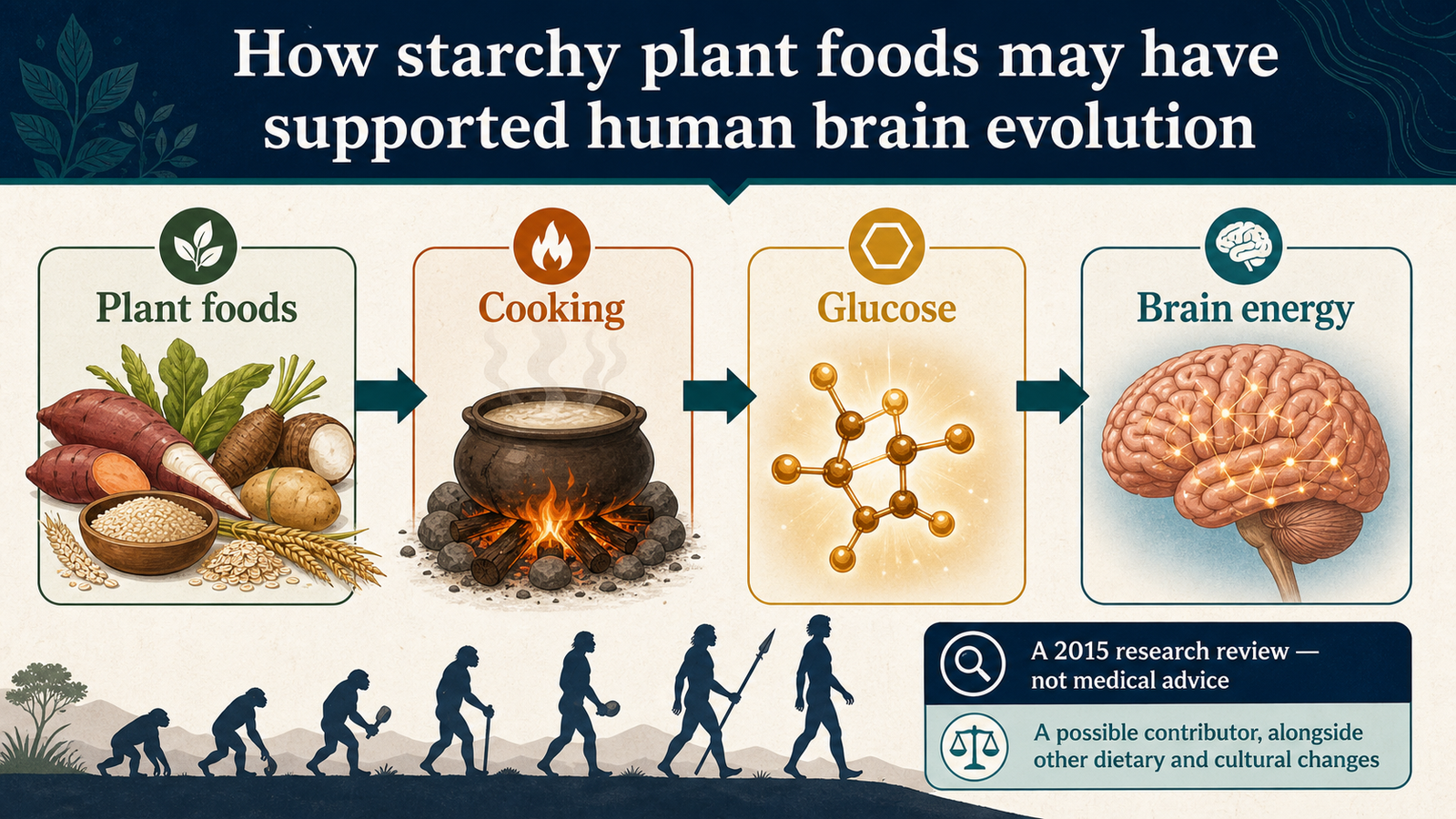
Human brain evolution was shaped by many connected changes, including diet, cooking, movement, social life and biology. A 2015 review by Karen Hardy and colleagues highlighted one important idea: digestible carbohydrates from plant foods may have contributed to the energy needed by growing brains.
Research details
The main idea
The human brain has high energy requirements. The researchers proposed that plant foods containing starch, such as roots, tubers, seeds and grains, could provide a reliable source of glucose after digestion.
Cooking may have made many starchy foods easier to eat and digest. This could have increased the energy available to early humans while brain size and other human traits changed over long periods of evolution.
From plant food to usable energy
Why starch and cooking matter
- Starch is a carbohydrate found in foods such as tubers, roots, grains and some seeds.
- Digestion breaks starch into glucose, which can be used as energy by many body tissues.
- Cooking can make some starchy foods softer, easier to chew and easier to digest.
- The authors argue that this may have expanded the value of plant foods in early human diets.
- Meat and other animal foods also remained important; the research does not present a single-food explanation for brain evolution.
What this research does not say
- It does not say that added sugar is healthy or required for brain health.
- It does not prove that honey or fruit sugars alone made human brains larger.
- It does not show that one modern diet is best for every person.
- It does not replace personal nutrition or medical advice from a qualified professional.
50-point brief summary
- This page explains a 2015 research review.
- The review examined carbohydrate in human evolution.
- It was published in The Quarterly Review of Biology.
- It was not a new Science journal study.
- Karen Hardy was one of the authors.
- Jennie Brand-Miller was one of the authors.
- The paper focused on starch-rich plant foods.
- It did not focus only on fruit or honey.
- The brain has high energy requirements.
- Glucose is an important fuel for many tissues.
- Digested starch can provide glucose.
- Roots and tubers can contain starch.
- Seeds can also provide carbohydrates.
- Some grains are starch-rich foods.
- Cooking can improve food digestibility.
- Cooking can make some foods easier to chew.
- Raw starch can be harder to digest.
- Fire may have changed food preparation.
- Plant foods may have become more useful after cooking.
- The authors link this to available energy.
- They describe a possible evolutionary advantage.
- The idea is not proof of one single cause.
- Brain evolution had many possible drivers.
- Animal foods were also important in early diets.
- Carbohydrates did not replace every other food source.
- Early human diets varied by place and season.
- Archaeological evidence has limits.
- Scientists cannot know every ancient meal.
- The paper presents an evidence-based hypothesis.
- Its conclusions should be read with care.
- Salivary amylase starts starch digestion in the mouth.
- Humans show variation in amylase genes.
- Gene changes may relate to dietary adaptation.
- The exact timing of those changes is uncertain.
- Evolution happened over very long periods.
- Cooking was one important cultural development.
- Starchy foods may have provided reliable energy.
- The study challenges meat-only explanations.
- It adds plant foods to the discussion.
- It does not recommend eating more added sugar.
- Whole foods and refined sugar are not the same.
- Modern diets are different from ancient diets.
- Individual nutrition needs can differ.
- Health advice should come from qualified professionals.
- This page is about evolutionary research.
- The original research should be checked directly.
- Scientific ideas can change with new evidence.
- The best takeaway is balance, not extremes.
- Plant foods were likely important to human history.
- This page is not medical or dietary advice.